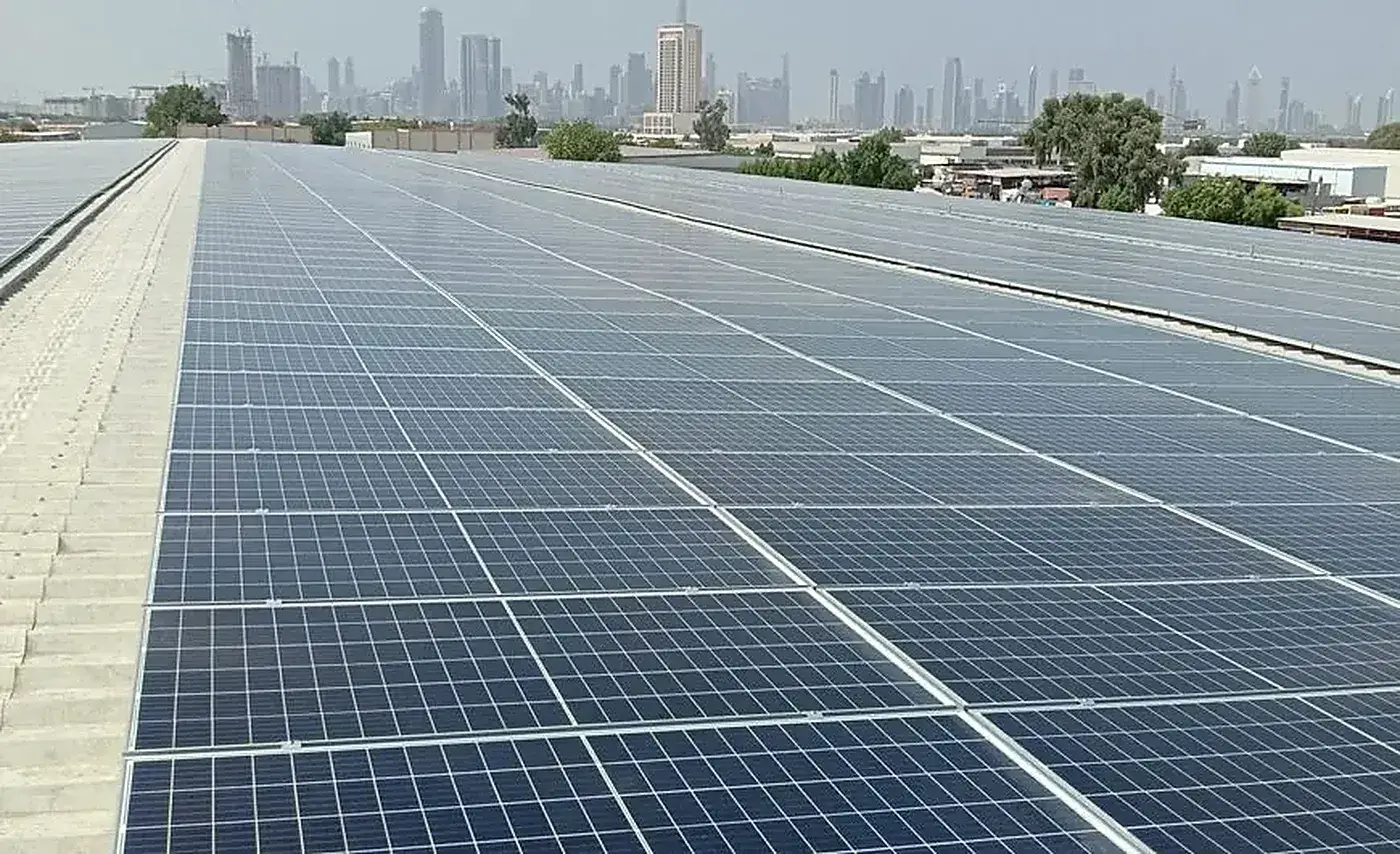
Zero capex. Power below the DEWA rate. Somebody else’s panels on your roof, your saving on the bill.
An investor pays for the system. You pay only for the solar kWh it produces, at a rate fixed in the contract below what DEWA charges — and keep the difference. Villas, offices, schools, warehouses and factories across Dubai and the UAE.
Get a leasing offer →The idea is older than solar: someone with capital owns the asset, you use it and pay as you go. On a roof in the UAE it works like this — four things, no small print.
An investor from the SOLTECH platform funds the panels, the inverter, the DEWA-approved protection and the installation. There is no deposit and no upfront fee on your side.
The system meters what it produces. You are invoiced for those kilowatt-hours at a rate written into the contract below the DEWA slab you currently pay. Less sun, smaller invoice.
Design, the Shams Dubai application, installation by a DEWA-enrolled contractor, monitoring, cleaning and maintenance over the term. Production commitments sit in the EPC and O&M contracts, not in a promise.
The term, the exit and what happens to the system at the end are written down before you sign: transfer to you, extension, or a buy-out schedule you can trigger earlier.
Lease, PPA, ESCO — three names for the same deal. In the UAE market they are used interchangeably. What actually differs from offer to offer is three lines in the contract: the rate you pay per kWh, the term, and the exit. Those three are what we negotiate for you.
Compare with buying →Every SOLTECH deal runs on one of three models. The same roof, the same panels — a different answer to who pays and who keeps the saving.
| Solar leaseESCO / PPA | Buy & OwnCapex + O&M | Совместное вложениеShared capex | |
|---|---|---|---|
| Upfront payment | AED 0 | Full system cost | Your share of the cost |
| Who owns the system | The investor, until the end of the term or your buy-out | You, from day one | Jointly, in proportion |
| What you pay each month | Solar kWh produced × a rate fixed below DEWA | Nothing — the O&M contract only | A smaller solar rate than a pure lease |
| Your saving | The gap between the DEWA rate and the contract rate, from the first invoice | The whole solar output, after payback | A bigger slice than a lease, with less capital than ownership |
| Maintenance and cleaning | Included, on the investor | Your O&M contract with the enrolled contractor | Shared under the project O&M |
| If the system produces less | Your invoice is smaller — you pay for output, not capacity | Covered by the EPC and O&M commitments | Covered by the project contracts |
| Для чего лучше | Owners who want the saving without the capital or the hassle | Owners who want the highest return and can fund it | Owners who want most of the upside with part of the capital |
Payback on Buy & Own and Co-invest depends on your DEWA slab and roof; run your own numbers in the bill and savings calculator. The investor-side economics behind every lease are open on the страница для инвесторов.
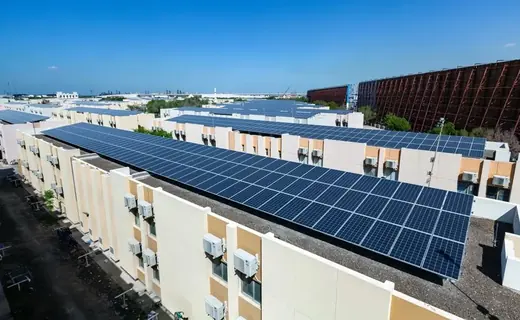
Leasing is SOLTECH’s core model for three kinds of roof. What they share: a DEWA bill big enough that the solar rate has room to sit below it, and daytime consumption to soak up the output.
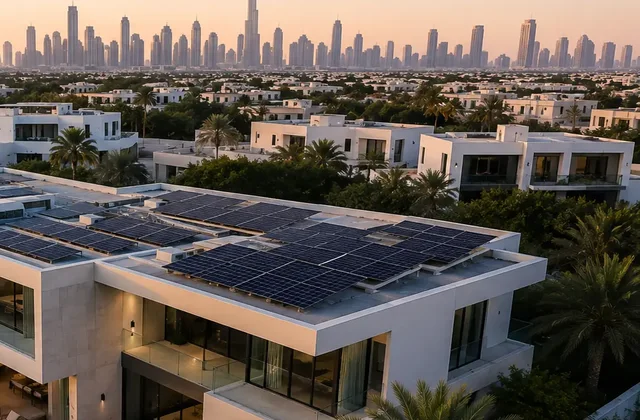
Dubai’s villa communities pay the top DEWA slabs from spring to autumn — air-conditioning does that. A lease puts panels on the roof with nothing paid upfront, and the monthly solar invoice lands below what the same kWh cost from DEWA. The bigger the bill above the first cheap 2,000 kWh, the wider the gap.
Solar for villas →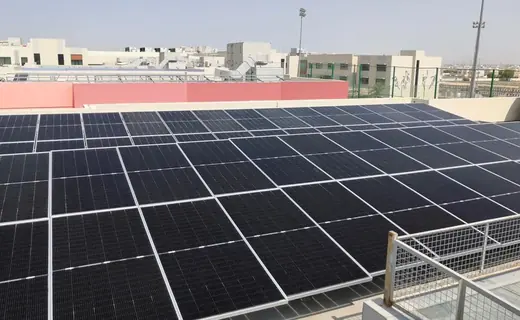
Offices, schools, clinics, showrooms, small retail. Daytime load that matches the sun, a roof nobody uses, and a board that would rather sign a supply contract than a capex line. A lease turns the roof into a fixed-price power source without a project on the balance sheet.
Offices, schools, retail →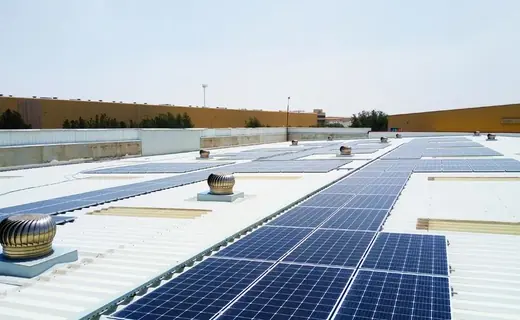
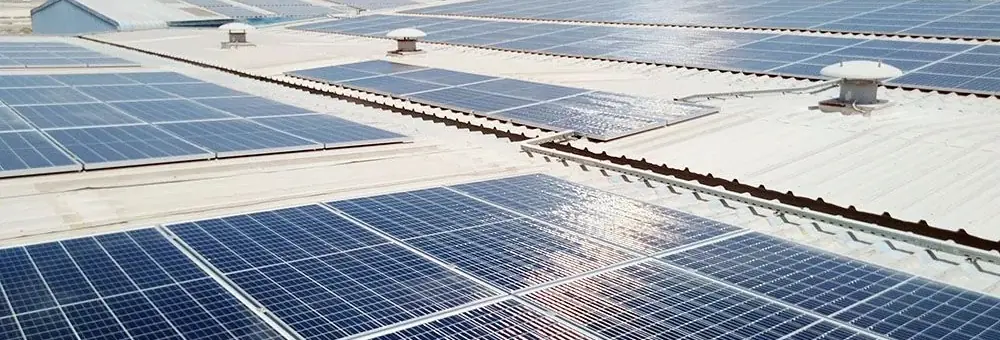
From 10,000 kWh a month the classic ESCO structure works at full strength: an investor funds the plant, you buy its output cheaper than DEWA for the term, and the saving shows on the first bill. Jebel Ali, DIP, Dubai South, Al Quoz, KIZAD.
Commercial & industrial →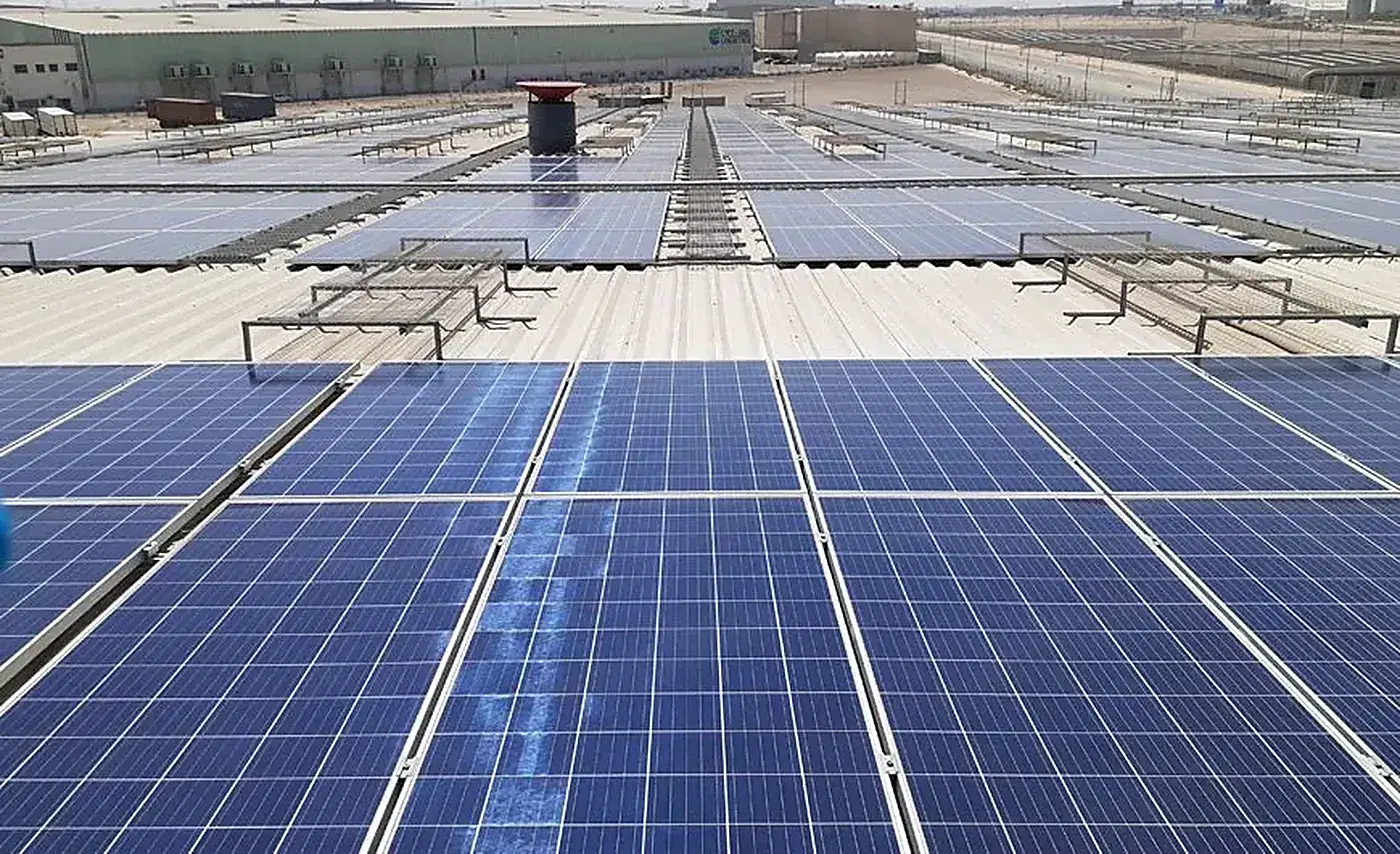
A lease is only as good as the three numbers in it. These are the ones we put in writing before you sign.
Six steps. You show up for two of them: the offer and the signature. The rest is ours.

Twelve months of DEWA bills and a look at the roof — photos, a plan, or a site visit. That is all we need to size the system.
System size, expected output, the solar rate against your DEWA slab, the term and the exit. On one page, with the saving in AED per year.
The platform matches the deal with funding and a DEWA-enrolled EPC contractor. You sign one contract; SOLTECH holds both sides to it.
The Shams Dubai application, the design approval and, where needed, the landlord or community NOC — prepared and followed through by us.
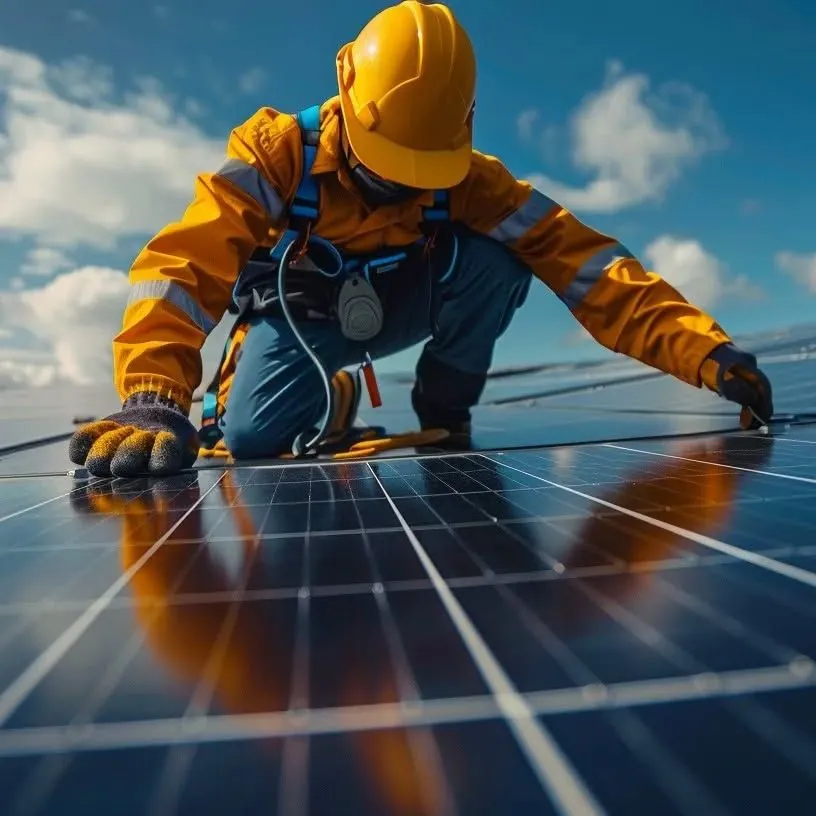
Installation by the enrolled contractor, DEWA inspection, the bi-directional meter and net metering under Shams Dubai. Surplus goes to the grid and comes back as credit.
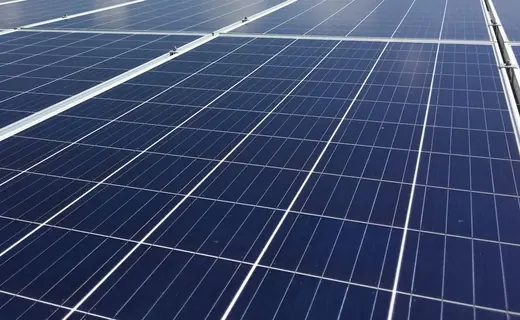
Monitoring, cleaning against Gulf dust and maintenance stay with the investor. You get a DEWA bill that shrank and a solar invoice that explains why.
Including the awkward ones. If yours is not here, put it in the form below and a SOLTECH consultant answers it on the call.
The investor who funded them, for the length of the term. You own the roof and buy the power. At the end of the term the system transfers to you, the contract renews, or you take the buy-out earlier — the schedule is in the contract from day one.
You pay for output, not capacity, so a weak month is a smaller invoice, not a bigger one. The production itself is protected by the EPC and O&M contracts SOLTECH negotiates and enforces on the investor’s side — cleaning against dust, fault response, replacement of a failed inverter. That is the investor’s risk to manage, which is exactly why they manage it.
In the UAE the three words describe the same structure: a third party owns the system, you buy the electricity it makes. A PPA emphasises the per-kWh price, an ESCO contract emphasises the energy-saving service, a lease emphasises the asset. SOLTECH contracts are metered pay-per-kWh, so you never pay for sun that did not shine.
A villa is a good fit when the DEWA bill runs well above the first 2,000 kWh slab for most of the year, the roof is flat and reasonably clear, and you own it or hold a long lease with the landlord’s consent. Send twelve months of bills through the form and we tell you within the offer whether the numbers work — and if buying outright would serve you better, we say so.
The full ESCO structure with a dedicated investor works from about 10,000 kWh a month; below that the fixed costs of the deal eat the margin. Medium roofs — offices, schools, clinics — are leased through the same platform with lighter paperwork. Either way, the offer tells you which route the numbers support.
Yes, with the landlord’s written consent — DEWA requires it for the Shams Dubai application, and the investor requires it for the term. Often the cleanest route is a three-way arrangement where the landlord signs the lease and the tenant buys the power; we structure that regularly.
The contract moves with the roof. The buyer steps into the lease and keeps the cheaper power, or you take the buy-out and hand over a solar-equipped building. Both routes are written into the contract before you sign, so a sale never becomes a negotiation.
Every grid-connected system in Dubai goes through Shams Dubai: design approval, installation by an enrolled contractor, inspection and the bi-directional meter. We prepare and file it. Other emirates have their own utility frameworks and we work within them.
Nothing upfront. Monthly, the solar kWh you received times the contract rate — and that rate is set below the DEWA slab you pay today, so the invoice replaces a more expensive part of your bill. The exact rate depends on your consumption, roof and term; it is on the first page of the offer, next to the saving in AED per year.
Every lease on this page is funded by someone. The model behind it — entry amount, contracted revenue, payback and exit — runs live on the investor page.
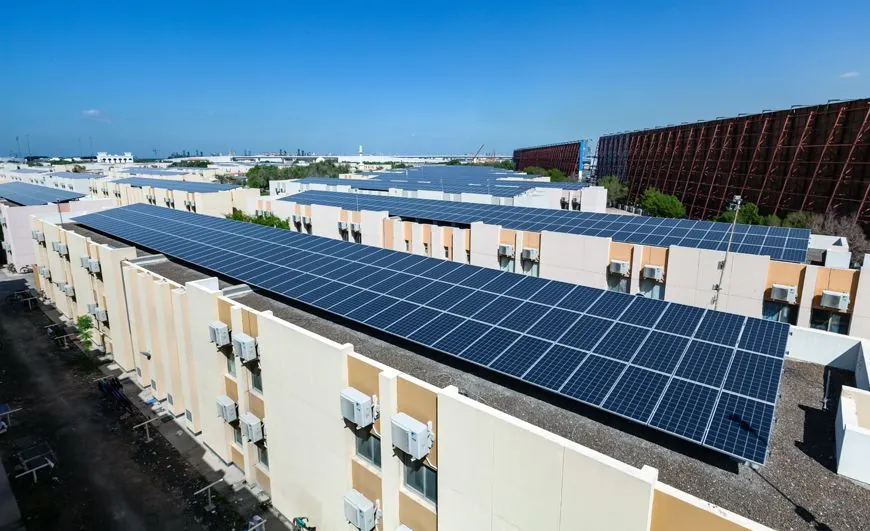
A platform, not an installer. That difference is the whole point.
Leave a number and the type of roof. A SOLTECH consultant calls back, asks for your DEWA bills, and comes back with the rate, the term and the saving on one page.